
Healthy ecosystems sustain productive activities, create jobs and open up new opportunities for coastal communities. Multiple-Use Conservation Areas (MUCAs) are built on this premise: a tool that Chile has promoted since 2005 as state policy to advance economic development linked to the care of nature, in contrast to views that tend to present the two as competing goals.
In practice, these areas seek to organize the different uses that coexist in a single territory, recognizing that, if they are not managed properly, some can affect others. The logic is simple: to let the activities that sustain local life and the local economy keep developing, but responsibly and in balance with their surroundings, avoiding conflict and securing benefits over time.
Miguel Espíndola, Director of Ocean Conservation at the NGO Pesca Sustentable, has taken part in planning processes across Chile and says these areas are the key to organizing territories on the basis of evidence. "You have to map the activities that take place, assess how compatible they are, identify conflicts and manage them. In general, the main problems arise when there is an attempt to introduce intensive activities that do not follow this logic, because they put at risk other activities with a lower impact but high socioeconomic value for local communities."
Along the same lines, he adds that respecting and understanding what each territory is suited for is decisive, since "relaxing environmental safeguards for highly contentious projects can end up displacing uses such as artisanal fishing, tourism or small-scale aquaculture, which depend on healthy ecosystems to sustain themselves over time."
Juan Fernández: pioneers in reconciling economic development and protection
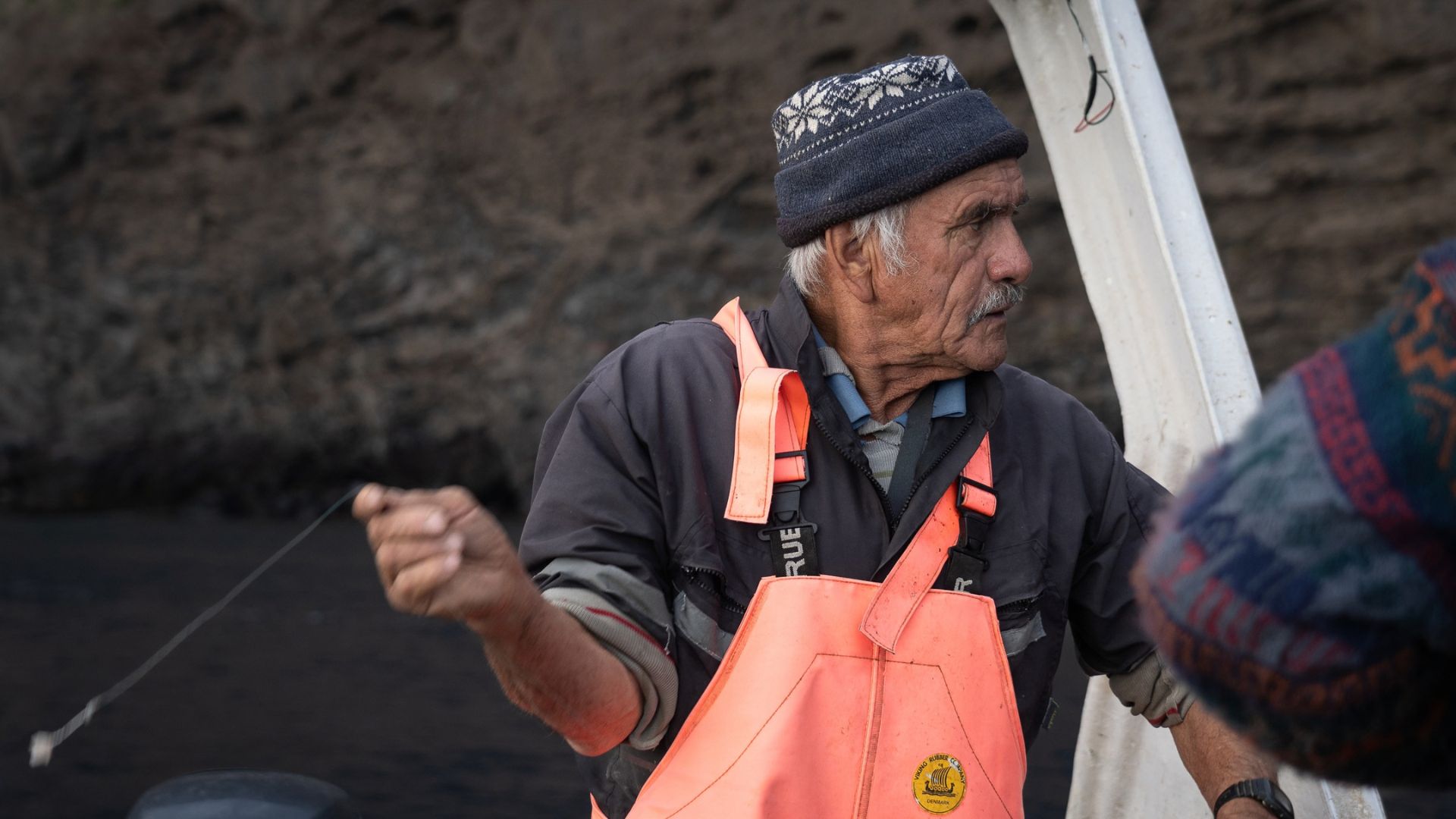
One of the most emblematic cases is the Juan Fernández Archipelago, where regulations and institutions came to put down on paper what the community was already doing based on ancestral knowledge. As early as 1935, lobster fishers (Jasus frontalis) began to regulate themselves: they banned the capture of egg-bearing females, set a minimum size for taking lobsters from the sea and established a four-month closed season — three measures aimed at securing the reproduction and growth of a species that is the community's main livelihood.
More recently, faced with the threat of industrial fishing, the community pushed for effective protection of its marine territory. On one hand, through the creation of the "Mar de Juan Fernández" Multiple-Use Conservation Area, which allows tourism, artisanal fishing and recreational fishing to coexist; and on the other, through the establishment of five marine parks inside the MUCA, along with an additional park that safeguards the Exclusive Economic Zone around the archipelago and the Desventuradas Islands.
Espíndola stresses that in this case it is the community itself that has defined its path. "We have had the opportunity to support this process, strengthening activities that are consistent with what the territory is suited for, such as artisanal fishing and special-interest tourism. Beyond organizing the uses of the sea, this has put Juan Fernández on the international map, attracting resources for research, conservation and local development."
That international visibility, which led the community to feature in documentaries and on magazine covers, had unexpected effects. Julio Chamorro, president of the community organization Mar de Juan Fernández, explains: "In 2008 the ex-vessel price of our lobster was 5,000 pesos and today it is 22,000, and it keeps rising. Commercially we did nothing; we simply benefited from international exposure as a sustainable fishery."
Asked what lessons the Juan Fernández experience offers other communities seeking to protect their territory, Julio says: "These measures have a lot to do with common sense. A fisher is not going to tell you 'I want to catch everything and I don't care if it runs out.' Communities know what they have to do; the challenge is how to do it, and that is where the support of science and institutions is essential."
Conservation as a driver of local economies
In the Los Lagos Region there is another significant experience under this approach: the Lafken Mapu Lahual Multiple-Use Conservation Area, on the coast of Osorno. There, the people of Caleta Huellelhue, a Mapuche-Lafkenche community within the area, based their economy for decades on harvesting choro zapato mussel, which became increasingly scarce due to intensive exploitation.
Today they are seeking to reinvent themselves and recover this emblematic resource. In that process, caring for and restoring the ecosystems has been key to safeguarding the scenic beauty of the territory, which opens up new opportunities linked to tourism.
Since its management plan was enacted in 2019, guidelines have been established to promote community participation and the development of sustainable practices, which has translated into coordinated work between the Ministry of the Environment, local stakeholders and civil society organizations.
This recovery began with a closed season driven by the community itself, which now adds up to more than seven years without harvesting and has shown concrete results: according to monitoring, the abundance of choro zapato mussel (Choromytilus chorus) tripled between 2015 and 2026. Today, with support from the GEF project Economic Incentives for Biodiversity Conservation, the community has taken a further step, seeding more than one million juveniles in the Huellelhue river estuary.
Raúl Romero, a local diver who lived through the golden age of this resource, says the results have them very encouraged by the concrete opportunity to strengthen the local economy. "We hope it is a success and that it allows us to generate income by working responsibly and sustainably in the future."
The next stage of the project aims to resume harvesting sustainably and to position the product in the market with added value. "In this context, we are working on a certification and recognition scheme called 'Comunidades Azules' (Blue Communities), awarded through the futuroazul.org platform. Through this tool we want to connect these communities with national and international markets that value the traceability, the story and the conservation effort behind each product," said the director of the NGO Pesca Sustentable.
Creating value in northern Chile
The Isla Chañaral Marine Reserve (RMICHA), created in 2005, has become an emblematic case when it comes to generating concrete benefits for local economies. Unlike other conservation designations, harvesting is not allowed here, which favors high levels of biodiversity. This is reflected in extensive seaweed beds and in the presence of diverse fish communities, making it a particularly attractive setting for recreational diving in mainland Chile.
Far from limiting development, this condition has driven new opportunities. The wealth of marine wildlife, which includes dolphins, penguins and cetaceans, has positioned the reserve as a destination of national and international tourist interest, and it is part of the offering promoted by Chile's National Tourism Service (SERNATUR).
Local boats run wildlife-watching trips that attract thousands of visitors every year, generating economic activity that reaches beyond the sea and extends into nearby areas. In towns such as Punta de Choros and Chañaral de Aceituno, demand for accommodation, food and transport services has grown exponentially, contributing directly to income and job creation for coastal communities.
In this regard, a study carried out for Chile's Fisheries and Aquaculture Research Fund, based on a random sample of the community of Chañaral de Aceituno, found that 100% of respondents perceive a positive impact on economic activity thanks to the existence and management of the reserve, while 87% report improvements in their income. These results reinforce the idea that such initiatives can become a significant driver of local development.
Certainty and incentives: key conditions for conservation to drive local development
For more territories to advance toward models where conservation and development go hand in hand, it is important to create concrete incentives so that activities compatible with conservation can develop fully. "Essentially, it is about aligning rules and incentives so that conservation stops being seen as a barrier and becomes a real development opportunity for coastal communities," says Miguel Espíndola.
In closing, he warns that the essential thing is to have clear rules. "We need greater environmental legal certainty, not only for investors behind megaprojects, but also for the territories themselves. If the State defines territories with a sustainable development vocation, those rules must be respected over time, avoiding incompatible activities that put at risk the ecosystems and the local economies that depend on them."