
Through the "Comunidades Azules" (Blue Communities) label, the aim is to recognize and give visibility to small-scale fishing communities that manage their resources sustainably, equitably and responsibly toward the environment.
"We want to reach a market of discerning consumers." That is how Jorge Loy, werkén (spokesperson) of the Loy Cumilef community, sums up the purpose behind Caleta Huellelhue's effort to restore the choro zapato mussel, a product that enjoyed decades of abundance before being affected by unregulated harvesting.
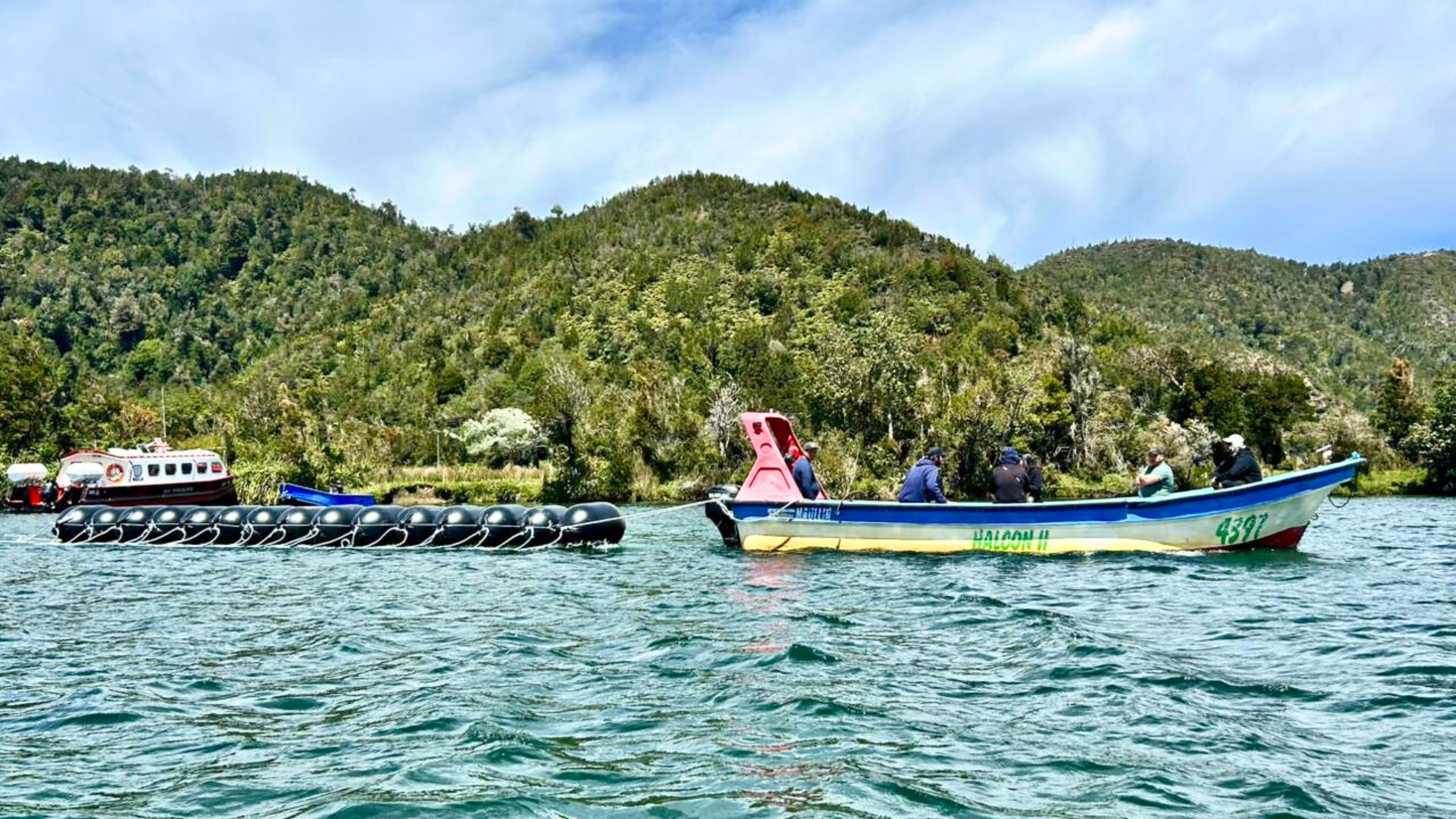
With support from the GEF Economic Incentives for Conservation project, the community is taking part in an initiative designed to speed up the recovery of the natural choro zapato bed through several strategies, among them the production of seed at the hatchery of the Mehuín Polytechnic High School. To keep moving forward, a culture line was installed last week so that the seed can acclimatize to the estuarine environment before being planted in the areas the community has identified as suitable for their growth.
If the positive forecasts hold, the community will need to prepare for the challenge of marketing its flagship product responsibly. With that in mind, the NGO Pesca Sustentable, through its Futuro Azul program, is designing a recognition and certification system for communities that promote good fishing practices.
Through the "Comunidades Azules" initiative, a label will be awarded to recognize and give visibility to small-scale fishing communities that manage their resources sustainably, equitably and responsibly toward the environment, encouraging fair, differentiated marketing in markets that value sustainability. "The idea is that buyers can recognize and value the difference between a choro zapato that comes from illegal fishing or from an overexploited bed and one harvested in communities like Huellelhue," explains Miguel Espíndola, the organization's Director of Ocean Conservation.
Jorge Loy also stresses the importance of a model grounded in respect for the environment: "The intention is not to produce at a large scale or to alter the natural ecosystem, but to support the reproduction of the mussel and the restocking of the bed until it reaches a healthy balance."
Background
Caleta Huellelhue is a coastal locality in the municipality of Río Negro, in the Los Lagos Region, which has been protected since 2005 under the Lafkén Mapu Lahual Multiple-Use Conservation Area designation.
According to Claudio Castro, a professional at the Ministry of the Environment who has worked in this territory for more than 15 years, the conservation designation has been key to reconciling environmental protection with community life: "This status allows communities to remain and to continue their customary activities in balance with protection. What we have here is a conservation designation that is not strict, but rather very consistent with the way the communities themselves live together."
Castro also notes that this model has made it possible to develop territorial management instruments that strengthen local governance. One of them was the designation of the choro zapato as a Conservation Target, which laid the groundwork for a management plan aimed at the sustainable use of this resource.
With that instrument in place, and based on the results of estuary monitoring, the community — supported by public institutions and civil society organizations such as Centro de Pesca Sustentable — introduced a measure that was a first at the national level: a harvesting ban. This means that it was the community itself that decided to temporarily halt harvesting of the resource, in order to support the natural recovery of the choro zapato bed.
Five years on, the results of this strategy show a remarkable recovery: the first monitoring exercise, in 2015, estimated that the estuary held just over 22 metric tons, while the data collected in 2024 showed that the population had grown to more than 92 metric tons.
Looking ahead
Beyond promoting responsible origin certification, Futuro Azul aims to commercially connect communities with "ocean ambassadors" through a sustainable marketplace that brings together producers and buyers committed to ocean conservation. The system is intended to build a collaborative ecosystem that links the work of artisanal fishing coves directly with consumers who value the traceability, quality and sustainability of seafood.
On the prospects for marketing the product, Cristian Loy, a member of the community, commented: "I have high hopes for this project, because it means that in the future we can have an income from the choro zapato that lets us make the most of what we have here."